
Psalm 23 is so familiar that the words can pass over the mind without leaving any trace. It is read at funerals, embroidered on tea towels, set to music a thousand ways. The aim of this article is to slow down and look at what David is actually doing across six short verses — because under the familiarity is one of the most carefully constructed prayers in the Hebrew Bible.
"The Lord is my shepherd; I shall not want"
The opening sets the entire frame. "The Lord" — Yahweh, the covenant name. "My shepherd" — possessive, personal. The statement is a confession of trust before any need is named. The second clause is the consequence: not "I have everything I want" but "I shall not lack." Two different claims.
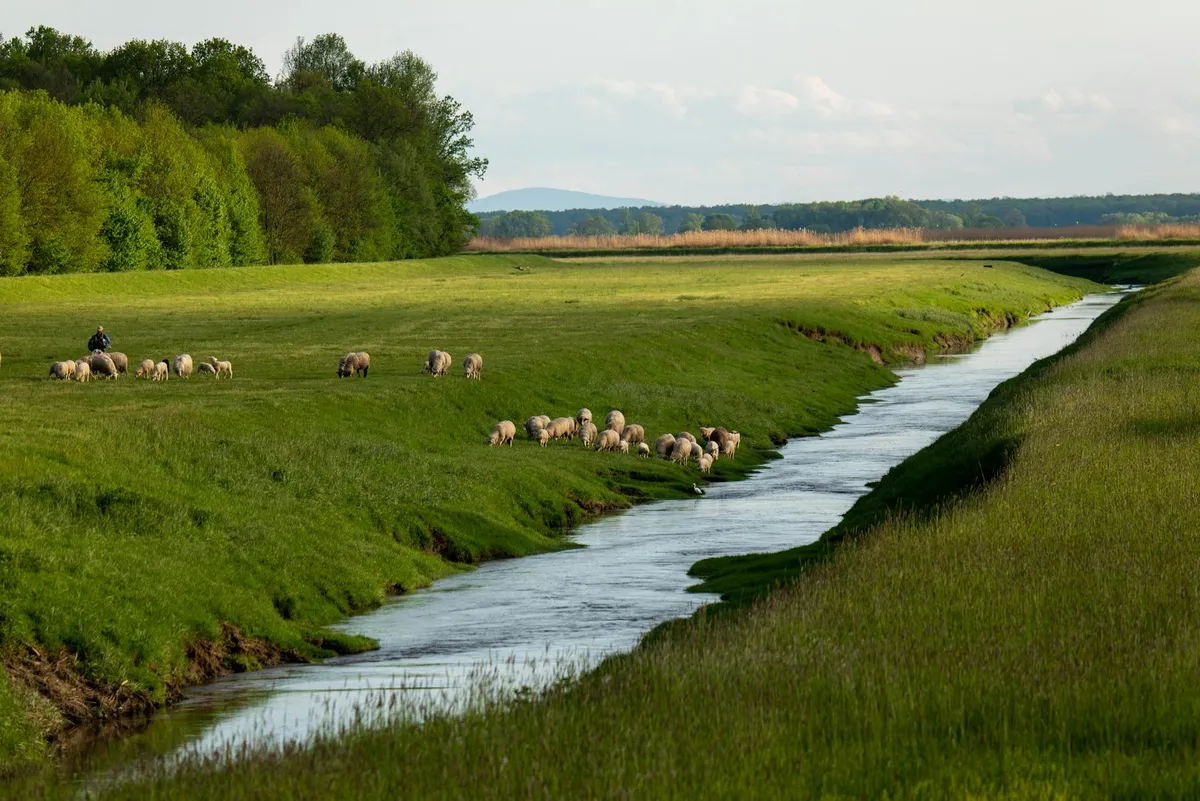
"He maketh me to lie down in green pastures"
The verb is causative. The shepherd makes the sheep lie down. Sheep do not naturally rest until they are full, watered, and unafraid. The shepherd's job is to produce all three. So is God's.
"He leadeth me beside the still waters"
"Still waters" in the original carries the sense of "waters of rest" — quiet streams sheep can drink from without fear of being swept away. David is saying God leads him to refreshment that is also safe.
"He restoreth my soul"
The verb means to bring back, to return. The soul is one that wandered or grew tired; the shepherd brings it back. This is a verse for seasons of dryness — the restoration is not the sheep's work, it is the shepherd's.
"He leadeth me in the paths of righteousness for his name's sake"
The motivation matters. The leading is not for the sheep's deserving but for God's name. This is repeated throughout the Psalms and is one of the most freeing truths in scripture: God's faithfulness rests on God's character, not on ours.
"Yea, though I walk through the valley of the shadow of death"
Note the preposition: through. Not "into and stuck." The valley is real, the shadow is real, but it is a passage. The shepherd does not always lead us around darkness; often He leads us through it. The promise is presence, not exemption.
"Thou anointest my head with oil; my cup runneth over"
The imagery shifts from shepherd-and-sheep to host-and-guest. Anointing oil was poured on a guest as a gesture of welcome and honour. The cup runs over — abundance, not scarcity. The Psalm ends in a feast.
"Surely goodness and mercy shall follow me all the days of my life"
"Follow" is mild in English. The Hebrew word is closer to "pursue." Goodness and mercy chase him down. The picture is not a quiet escort; it is active pursuit by grace itself.
The shape of the whole
The Psalm moves from green pasture to dark valley to an overflowing table. It refuses to pretend the dark valley is not real, but it locates that valley within a larger story of pursuit by goodness. That is the gospel logic. That is why the Psalm has lasted three thousand years.